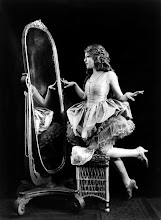
One of the my favorite romantic comedies about music, love, cross-dressing, and the mafia definitely has to beBilly Wilder's 1959 film Some Like It Hot. With the stellar cast of Jack Lemmon, Tony Curtis, and Marilyn Monroe, it is easy to see why this steamy film is on top of so many film lists and continues to delight and entertain nearly fifty years after it was made.
After being witness to the St. Valentine's Day Massacre, saxophonist Joe (Curtis) and bass violin player Jerry (Lemmon) try to hide from the mob by disguising themselves as Josephine and Daphne and joining an all-girl band headed by vocalist and ukulele player Sugar Kane (Monroe) headed for a rich resort in Miami filled with millionaires. Joe falls in love with Sugar and pretends to be a rich millionaire (when he's not in drag as Josephine). Meanwhile "Daphne" is being chased around by real millionaire Osgood Fielding (Joe E. Brown), who's yacht Joe conveniently uses to keep up his charade with Sugar. When the mob comes for a convention in Miami to deal with the two missing witnesses from the St. Valentine's Day Massacre, a whole new dimension of comedy ensues.
For a more detailed synopsis and review, you can click here, thanks to filmsite.org.Legendary costume designer Orry-Kelly designed the dresses worn not only by Monroe but also by Curtis and Lemmon when they were dressed up as their female alter-egos. The cast in this film is not the original cast Wilder and the studio intended at all. Danny Kaye and Bob Hopewere considered for the roles that went toJack Lemmon and Tony Curtis. Mitizi Gaynor was wanted for Monroe's role of Sugar Kane and director Billy Wilder originally wanted Frank Sinatra as Jerry/Daphne. Of course, the roles being assigned as they were have made the film that much more memorable.
In fact, this film is #81 on IMDB's list of 250 Greatest Movies, made Time's list of 100 Greatest Movies, and AFI voted it #14 on its list of top movies and #1 on it's list of top comedies. Premiere Magazine also voted it as the #1 comedy on its list of 50 Greatest Comedies of All time and Entertainment Weekly voted it 9th on its list of Greatest Comedies of All Time. For more info and reviews on the film, you can check out this article at Frank's Movie Log. For a more in depth look at the filmography, you can check out this site, thanks to film.u-net.com. Screensavour.net has this site, which focuses on both the history and the humor of the film. Finally, a brief overview can be found here, thanks to 1001flicks blogspot. As a special treat, here is the original trailer for the film:
Though it is usually categorized as a musical, the 1952 filmSingin' in the Rainhas all of the elements of a classic romantic comedy film. Co-directed by Stanley Donen and song and dance man Gene Kelly, the film is a great example of a Hollywood movie that parodies Hollywood as well as the politics of falling in love on a Hollywood set.
Don Lockwood (Kelly) and Lina Lamont (Jean Hagen) are the on-screen romantic duo of Lockwood-Lamont, whereas off stage, they detest each other. When Hollywood suddenly goes from silents to talkies, studio head R. F. Simpson (Millard Mitchell) decides the next Lockwood-Lamont should be a talkie. Unfortunately, Lina talks like a sqwaking bird not a swooning starlet. Enter Kathy Seldon (Debbie Reynolds), a young actress who is struggling to make it but can sing, dance, act, and is the head of the Don Lockwood fan club, unbeknownst to Don himself. Don and pal Cosmo Brown (Donald O'Connor) conspire to have Lina's parts dubbed over by Kathy, but when Lina and friend Zelda Zanders (Rita Moreno) feel threatened by Kathy's presence, they attempt to ruin the whole scheme. Don has to prove his love for Kathy and Lina's sham in the midst of several colorful and catchy musical numbers.
The acclaim of this film is known far and wide. Singin' in the Rain is a definite must see for any film fan, buff, or viewer. Time voted it one of the 100-Must See Films of all time. It was on Entertainment Weekly's list of 10 Best Films and #8 on Empire Magazine's list of 500 Greatest Films of All Time. It made severeal AFI lists including #1 Musical, "Singin' in the Rain" as #3 song, #10 in the 100 Years...100 Movies List, and #16 in 100 Years... 100 Passions.
For a review and history of the film, you can look here at the mardecortesbaja blogspot. Roger Egbert's review of the film can be found here and a review from decentfilms.com can be found here. Noripcord.com has also done a review, as has leftfieldcinema.com.
For more information on the film, you can check out this page at filmsite.com or you can read this hypertextual reading of the film, thanks to Project Muse.
A classic tragic romance story that has been told over and over again in various forms, the 1950 film Cyrano de Bergerac brings to life the character's of French author Edmond Rostand'snovel of the same name. We all know Cyrano as the man caught in a famous love triangle, a lot of which results from his embarrasment over his even more famous nose. The film is public domain and those who would like to view it can do so here, thanks to Classic Cinema Online and Google.
The film stars José Ferrer as the hero, Cyrano, who is a famed swordsman and poet who is in love with the beautiful and much admired Roxane (Mala Powers ). Because of his long, odd shaped nose, Cyrano is too ashamed and self-concious to declare his love for Roxane out of fear of rejection. Roxane is in love with the handsome but pretty dense Christian de Neuvillette (William Prince), devastating Cyrano. When Christian comes to Cyrano, asking him to help win Roxane with his dramatic tongue, and Cyrano faciliates their romance, despite his love for Roxane. Meanwhile, Cyrano's enemy Comte De Guiche (Ralph Canton ) is also wooing Roxane. Cyrano provides room for Christian and Roxane to elope. When the Comte hears, he forces Christian to join the army in the war against the Spanish. Roxane goes to the camp and tells Christian it was his wonderful words he fell in love with and Christian is heartbroken, knowing the words were Cyrano and not his own. He does not get a chance to confess this to her and it is up to Cyrano to confess everything and tell Roxane of his love. But will he be too late?
Ferrer won the Best Actor Academy Award for his performance in this film, though the film itself was not universally liked by critics. The role of Cyrano de Bergerac became the defining role of Ferrer's career. It has been estimated that the plastic nose Ferrer wore for the role cost United Artists $1,500 at the time to make. While producing this film, Stanley Kramer was having trouble getting another pet project produced, a film known as High Noon. The writers tried to keep the film as close to the book as possible, which is hard in trimming an epic novel down to a nearly two hour long movie.
For some reviews of this film, you can check out this one done by Turner Classic Movies. You can read this review from bestcyrano.org or this one from the Gold Old Movie Reviews blogspot. Anotherreview can be found here at the Exporer of the Unknown blogspot.
Perhaps one of the best known silent film's and the film that started the idea of the male sex symbol way back in the 1920s, George Melford and William Marshall's 1921 film The Sheikmight be one of the best romance films ever made. The film plays out like a harlequin romance novel with the dashing Rudolph Valentino as the male lead at the height of his film career. After this film was released, flappers had tons of Valentino posters hanging up in their rooms and caused a cultural craze for everything Arabian. If you want, you can watch the film yourself here.
Valentino plays Sheik Ahmed Ben Hassan, a French educated Arab Sheik who has his every wish commanded, fights fierce in battle and even fiercer in love. Lady Diana Mayo (Agnes Ayers) is a British expatriate, staying with her brother Sir Aubrey (Frank Butler) in the Algerian town of Biskra. The Sheik catches her trying to sneak into the all-Arabian casino and finds something attractive in her fire and spunk. He sings outside her window that night and when she goes off into the desert on a guided tour with Mustapha Ali (Charles Brinley), he captures her and brings her back to his camp to be his wife. Diana is sullen in the desert and does not instantly fall in love with the Sheik, as he had planned. After raping her, the Sheik feels guilty and gives everything to her that she asks for, except her freedom. The Sheik's old friend, French writer Raoul de Saint Hubert (Adolphe Menjou) tells him this is a foolish way to win Diana's heart and the Sheik agrees to let her go. Before this can happen, Diana is captured by the desert bandits let by the Sheik's enemy Omair (Walter Long) and it is up to the Sheik to save her.
A lot has been written dissecting this film within modern social, political, sexual, and racial contexts. For an article that discuses The Sheik and sexuality in films, you can read here.This article deals with the social mores that surrounded the making and aftermath of The Sheik's release. This articledeals with racial profiling in movies such as in The Sheik and this article specifically deals with the treatment of Arabs in Hollywood cinema. All of these are good background readings for the film, if you want to see how it is currently intrepreted by several groups.
For reviews on the film, you can read this article from the Film Reel blogspot that gives some history of Valentino and the film. This review from the Media Center discusses the context of the film and interpretations of it, as do the articles in the paragraph above. Phoenix Cinema does a review of this film and its sequel Son of the Sheik, which was released in 1926 and also stared Valentino.
The film follows along with Gillian Holroyd (Novak), who is just your average witch-about-town living in Greenwich Village, New York with her cat, Pyewacket. Publisher Shep Henderson (Stewart) walks into her oddities shop one day to use the phone and Gil is smitten with him. Gil grows jealous when it turns out her old college rival Merle Kittridge (Janice Rule ) and casts a love spell on Shep to draw his attentions away from Merle. Unfortunately, Gil starts to fall in love with Shep as well and when a witch falls in love with a mortal, she looses her powers. Meanwhile, Shep's publishing agency has decided to accept a book being written by Sidney Redlitch (Ernie Kovacs ), who is writing about the supernatural with the help of Gil's warlock brother Nicky (Jack Lemmon ). At underground clubs, they meet several members of the supernatural community, including Aunt Queenie (Elsa Lancaster ). Gil eventually confesses her powers to Shep, who is disgusted with her, and Gil has fellow witch Bianca de Passe (Hermione Gingold ) break the spell Gil has cast over him. The film, of course, has a happy ending which I won't divulge here.
Stewart turned 50 on the set of this film and afterwards, ceased to play romantic leads focusing more on father figure roles. Both the film and the soundtrack that was released for it were moderate successes. The title is a reference to the phrase used during to the excommunication process against witches. The original Broadway stage production included Rex Harrison as Shepherd Henderson, Lilli Palmer as Gillian Holroyd, Jean Adair as Miss Queeny Holroyd, Larry Gates as Sidney Redlitch and Scott McKay as Nicky Holroyd. The name of Gil's cat Pyewacket comes from the records of witchfinder general" Matthew Hopkins, who listed is as one of the familiar spirits found in a small English town in 1644. The film was nominated for best Art Direction and Costume design for the 1959 Oscars, but did not win either.
Several reviews of this film are available for more background information. The Moon in the Gutter blogspot offers some insight into why the film has gone overlooked. Moviediva.com does a great article sighting reviews of the film and goes into detail about various interpretations and academic looks at the film and its subtext. The Spinning Image blog has a basic review of the film and one of the original reviews from the year it was released can be found here, thanks to The New York Times.
My family is very into books, music, and movies so I've been brought up around them. I got into classic film when I was in middle school through my mother who adores the old black and whites with Humphrey Bogart and Bette Davis. My grandmother calls me "Kate" because she says I remind her of Katharine Hepburn.

 One of the my favorite romantic comedies about music, love, cross-dressing, and the mafia definitely has to be Billy Wilder's 1959 film Some Like It Hot. With the stellar cast of Jack Lemmon, Tony Curtis, and Marilyn Monroe, it is easy to see why this steamy film is on top of so many film lists and continues to delight and entertain nearly fifty years after it was made.
 millionaires. Joe falls in love with Sugar and pretends to be a rich millionaire (when he's not in drag as Josephine). Meanwhile "Daphne" is being chased around by real millionaire Osgood Fielding (Joe E. Brown), who's yacht Joe conveniently uses to keep up his charade with Sugar. When the mob comes for a convention in Miami to deal with the two missing witnesses from the St. Valentine's Day Massacre, a whole new dimension of comedy ensues.
 were have made the film that much more memorable.


 Posts
Posts